While attending a workshop in St. Martins, Stewart and I asked Freeman if he was planning another trip to Israel as we had seen several of his images and read his periodical letter about his trip in 2020. Israel was a country that we really wanted to visit and a photo excursion would be a huge incentive. Freeman thought about this and talked it up with his “people” in Israel. Within two months, Freeman had put together an itinerary for a 12 day trip to Paran, in the Negev Desert in Israel and to Petra, and Wadi Rum in Jordan from January 4th to 17th, 2023. We immediately signed on. His people in Israel were wonderful hosts; Danny Hadas who lives in Paran Moshav and Susan Meyers who lives just north of Tel Aviv.
Freeman has a loyal following and many of the people we met on this trip have participated in his workshops. Israel is a 10,300 km from Canmore and a 9 hour time change. Stewart and I decided to travel carry on which necessitated us to be very frugal in our clothing choices and to outlay funds for travel tripods that would fit in our cases. We packed and repacked our kit several times. My roller bag held clothing, tripod and my computer. My backpack held camera gear, chargers, cords, an external hard drive and other personal items. My shoulder purse held credit cards and travel documents. We had to plan for cool weather so down jacket, toque and gloves were also packed.
Our journey to Negev and Jordan began with a tour of the Paran Moshav. Over the next 12 days, we were treated to guided tours with explanations of the terrain and history of the sites. Lunches, with the exception of a few days, were out in the field. Breakfasts were served at 7:30 and our daily activities began around 9 o’clock. Dinners were at 7pm and bedtime for Stewart and me, was shortly afterwards. We were over our jet lag by about the third day.
At dinner on our first night, we did a round table of self-introductions with a brief story of why we signed on to this trip. It was a great way to meet the group including our two hosts, Danny Hadas and Susan Meyers. All but four people had attended one or more of his workshops. I spoke of how Freemans has helped me “see” and be creative with my photography. Stewart spoke of his long history with Freeman and the joy of travelling to and photographing at places he might never have considered. Others spoke of Freeman’s compassion, his youthfulness, his philosophy of life, his teaching skills and of course his kindness. Freeman was very moved by this and in his very articulate way, expressed his thanks. I came away from dinner feeling very lucky and honoured to know and be a friend of Freeman Patterson, despite long gaps between our visits.
The photography workshop format was familiar to all of us. The morning was a series of talks by Freeman followed by evaluation of two photos submitted from each participant. Freeman showed images of the areas we were going to explore and travel to which was a gentle reminder of what to look for and what to experiment with. He covered topics we have heard before that were incorporated in his images. Visual design is paramount. He explained that tonal contrast is the overarching theme in the desert.
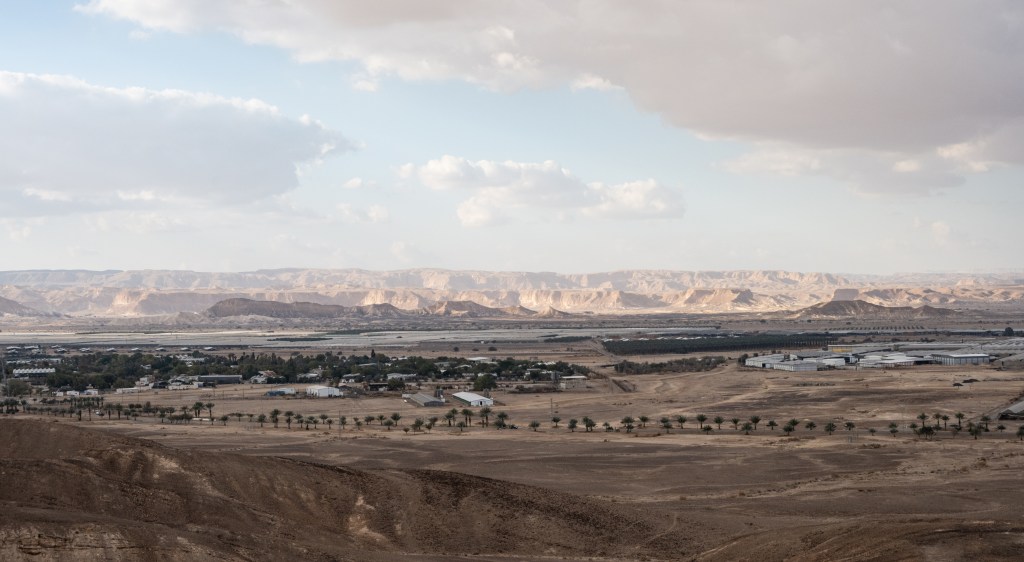
The follow photographs are from Moshav Paran, Timna Park and Wadi Ashosh in the Negev Dessert in south Israel.
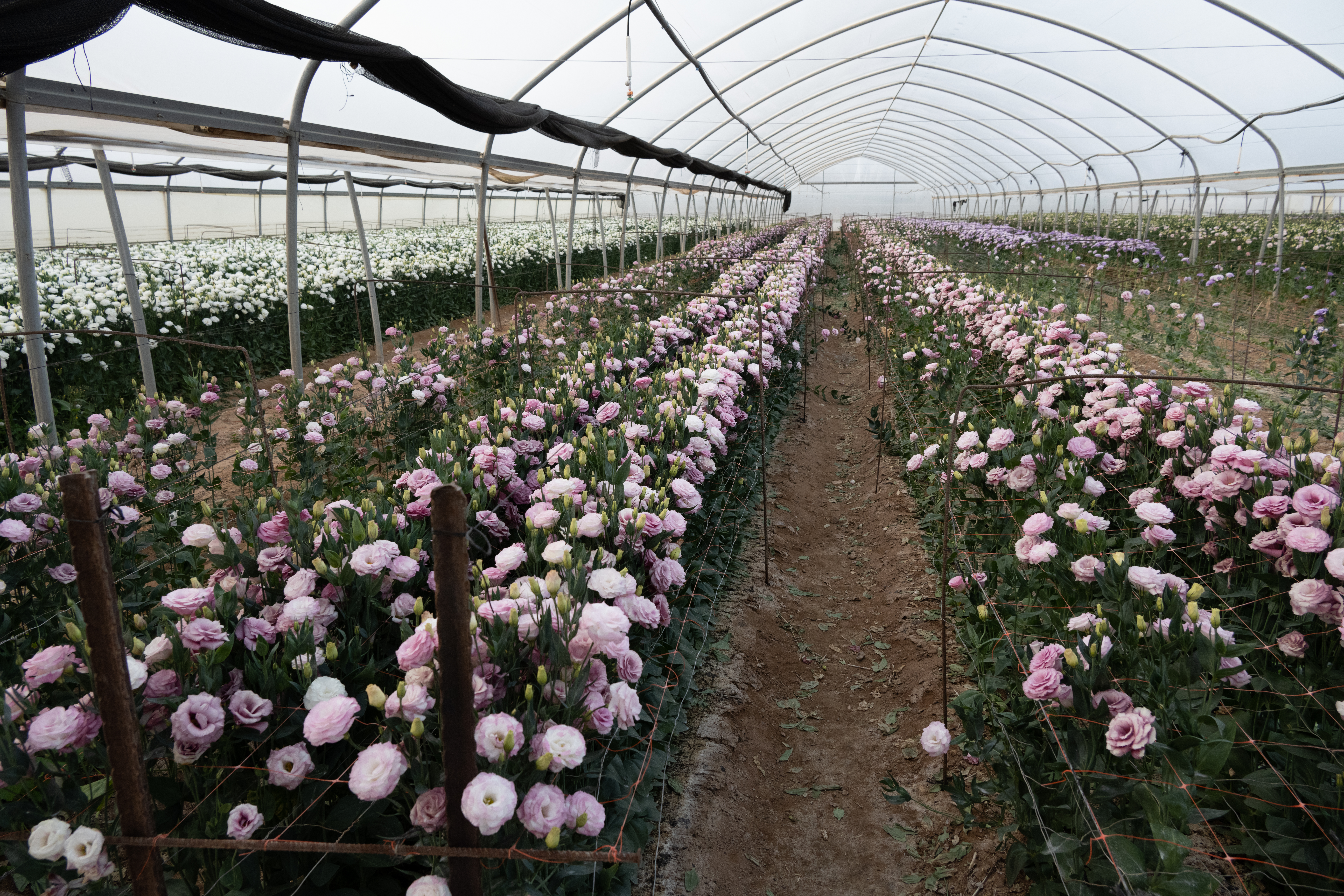
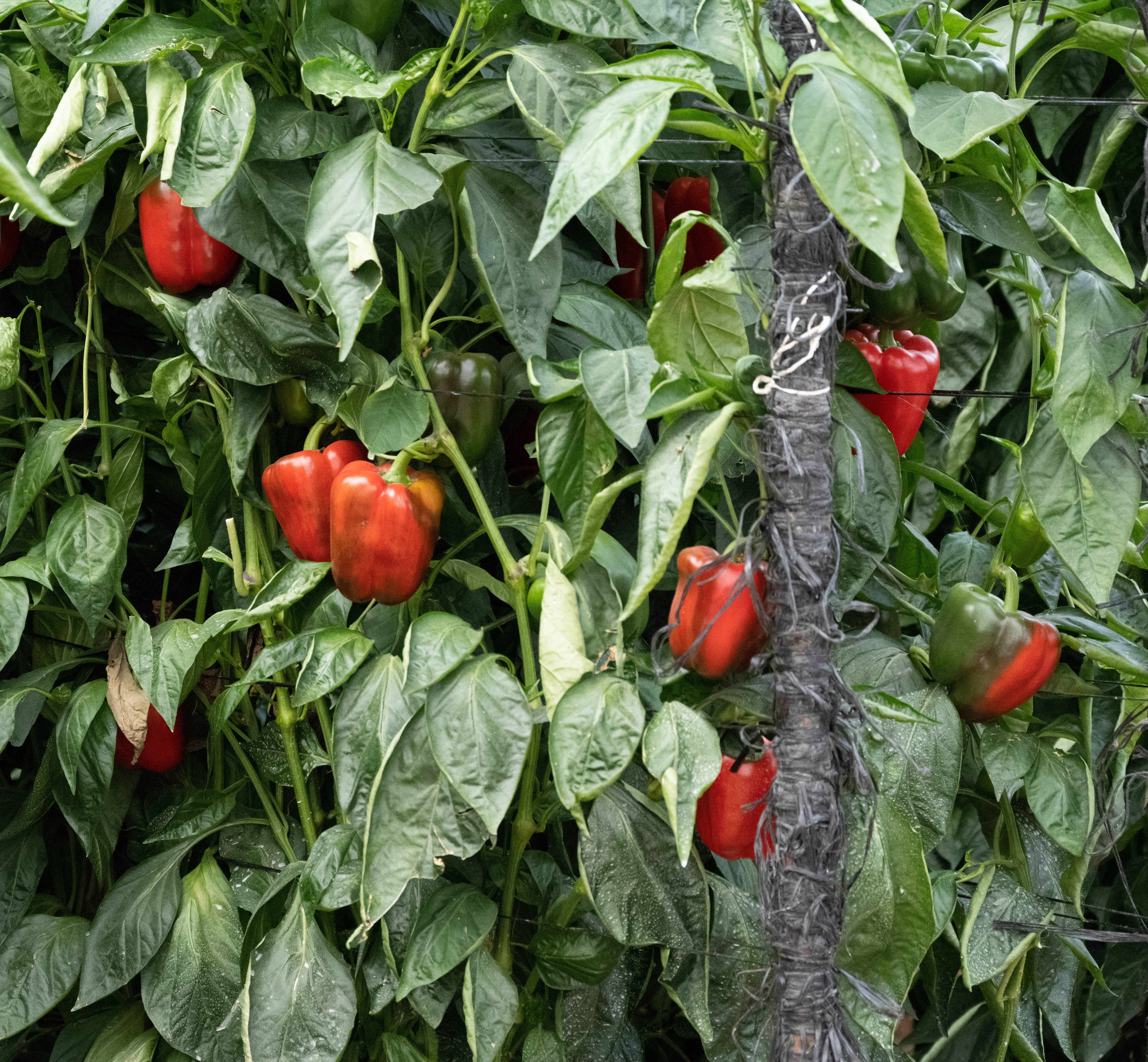
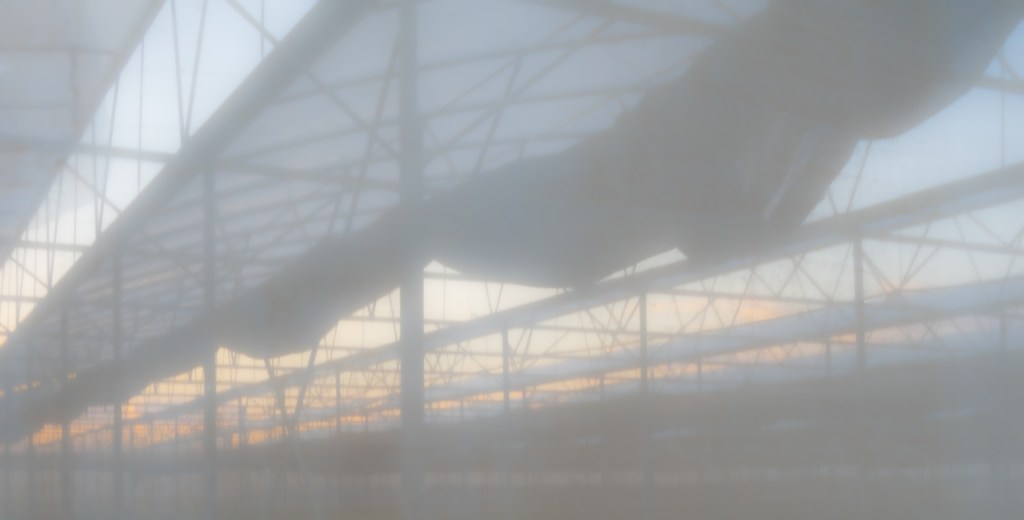
I made this picture towards the end of our first day at Paran Moshav as the sun was beginning to set. I had noticed hundreds of these net greenhouses along route 90 on our trip from Tel Aviv to Paran earlier in the day. Rows upon rows of red peppers were growing in this greenhouse. The netting diffuses the light and heat. Water is pumped up from an aquifer 1600 meters deep, and seeps into the plants through drip hoses laid at the base of the plants. The greenhouses abut one another in abundance. The uncultivated ground is sandy, hardened, dry and dusty. Water usage is monitored strictly. I was amazed how fruit, vegetables and flowers can be grown in areas of exceeding low rainfall and very dry harsh conditions.
In this image above, sunlight was contained and diffused, allowing me to create a sense of softness, and coolness which I needed as I was tiring because of being jet lagged. The image is a metaphor for the people living and farming the land. The lightness of the netting on the rigid metal posts and the oblique lines of the supporting beams suggest grace, resiliency and hardiness against the harsh climate of the desert.
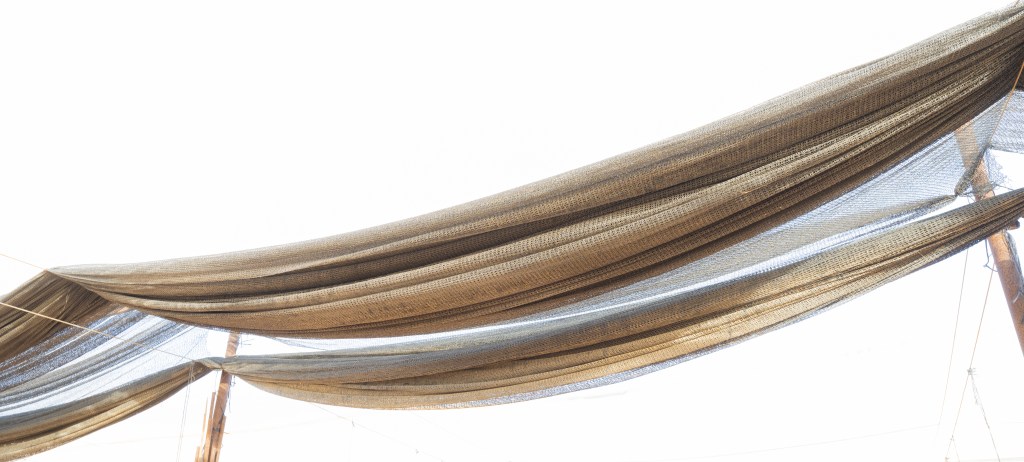
As part of the workshop exercise, I spent about three hours in an abandoned greenhouse located east of the highway in Paran. Freeman encouraged us to use this place to let go of inhibitions. To better compose my images, I used my tripod. It took me awhile to start to see and build my images using visual design guidelines espoused by Freeman. My photography tends to be minimalist. The nets in this photograph have been drawn aside to preserve them for future use. The fine grey, brown dust has been trapped in what is usually an off white sheer netting. These nets, despite the added weight, draped softly over their supports. The simplicity of this composition contrasts with the weight of their importance to a successful harvest.
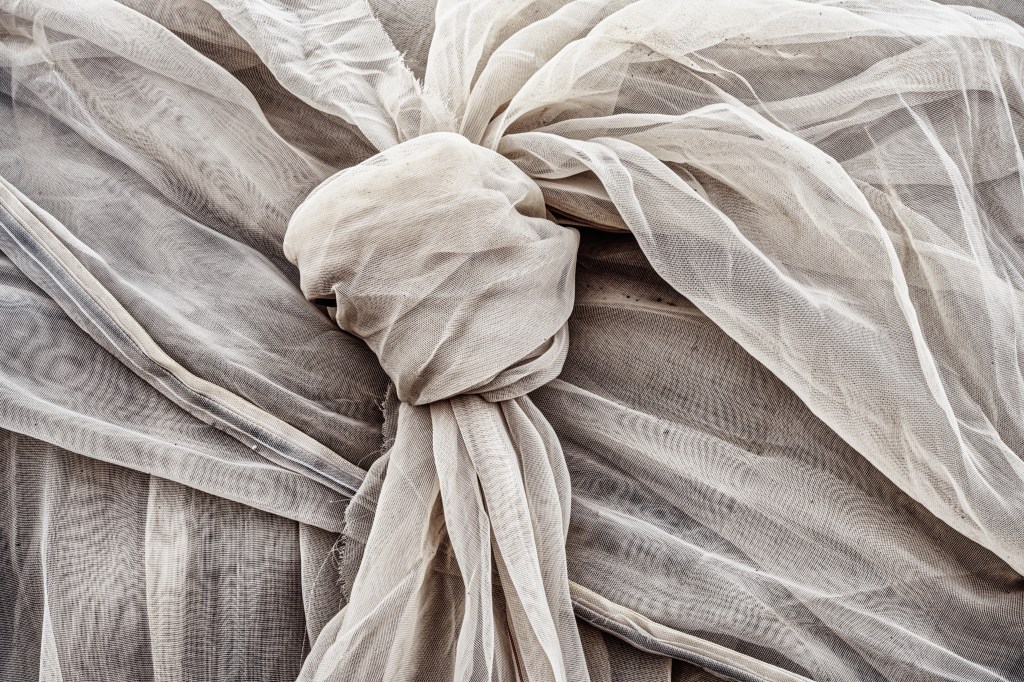
At the end of the photo shoot, I began to really see. There were ten large rolls of netting stacked up against the foundation of the greenhouse that I was wandering through. One roll had its end tied in a graceful knot which caught my eye. Grace again in the presence of utility, dust, dirt and harsh climate.
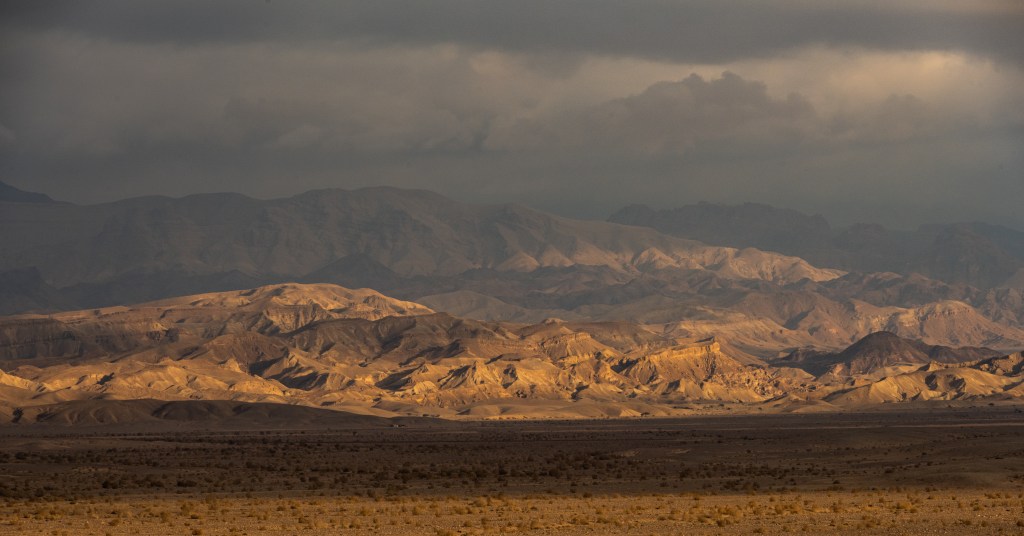
Paran is less than two miles from the Jordanian border. These images above and below were taken on a hill on the east side of the highway in Paran. The rain that fell in Paran earlier in the day moved off to the mountains and was over as quickly as it had come. The clouds were moving quickly creating fleeting light patterns on the mountain peaks. Capturing the light was challenging.
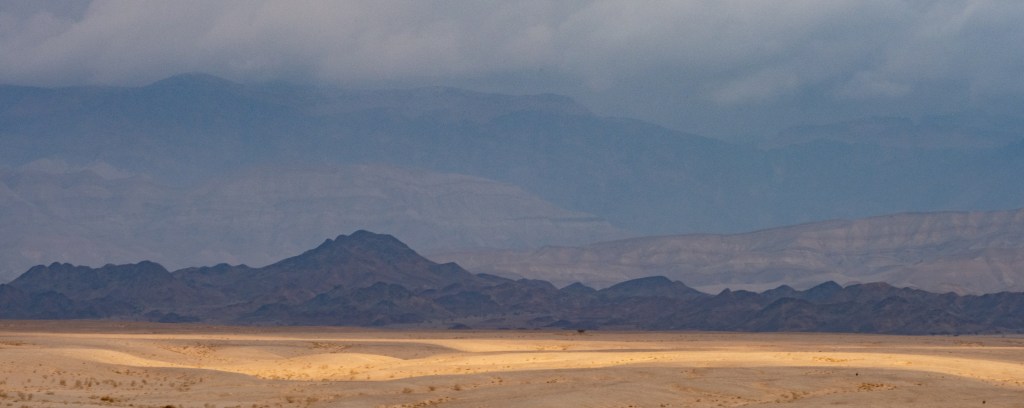
F/8 and Be There. The light was moving quickly and the long shadows on the desert floor mirrored the shape of the mountain range beyond. F/8 and be there. An expression that means sometimes you get lucky and the importance of always having your camera ready and within close reach.
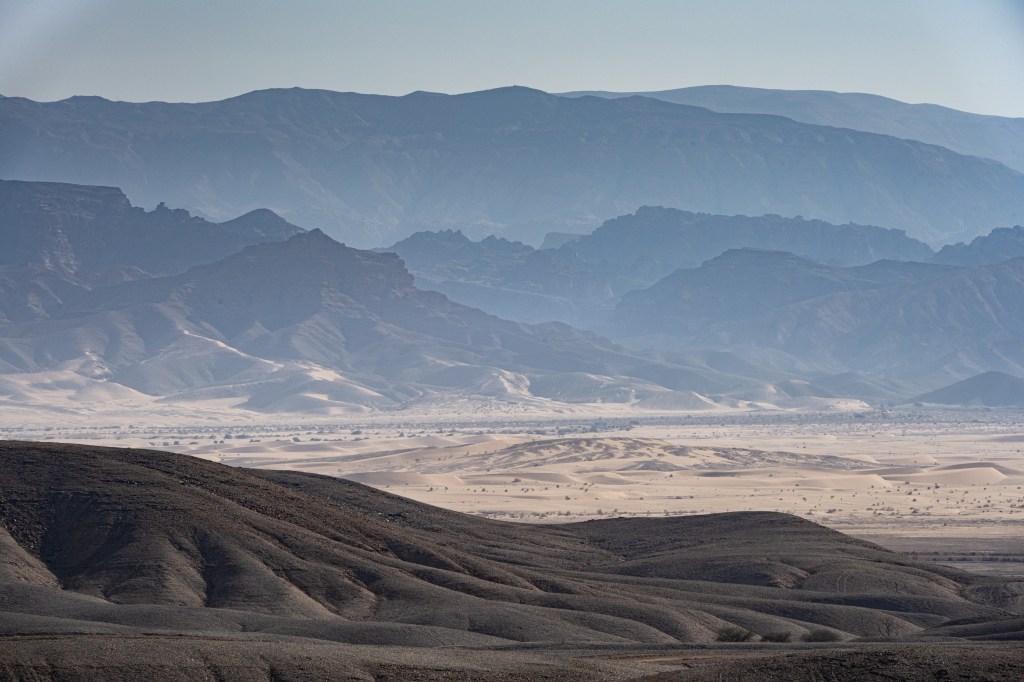
This image was taken on the drive south to Timna Park. Freeman asked the driver to stop on the side of Route 90 so we could capture the layers and light of the Jordan mountains. The foreground is Israel and the flat land and beyond is Jordan. The climate is harsh. Very little evidence of vegetation and human activity. The tonal contrast of the various layers gives a sense of great distance and wonder.
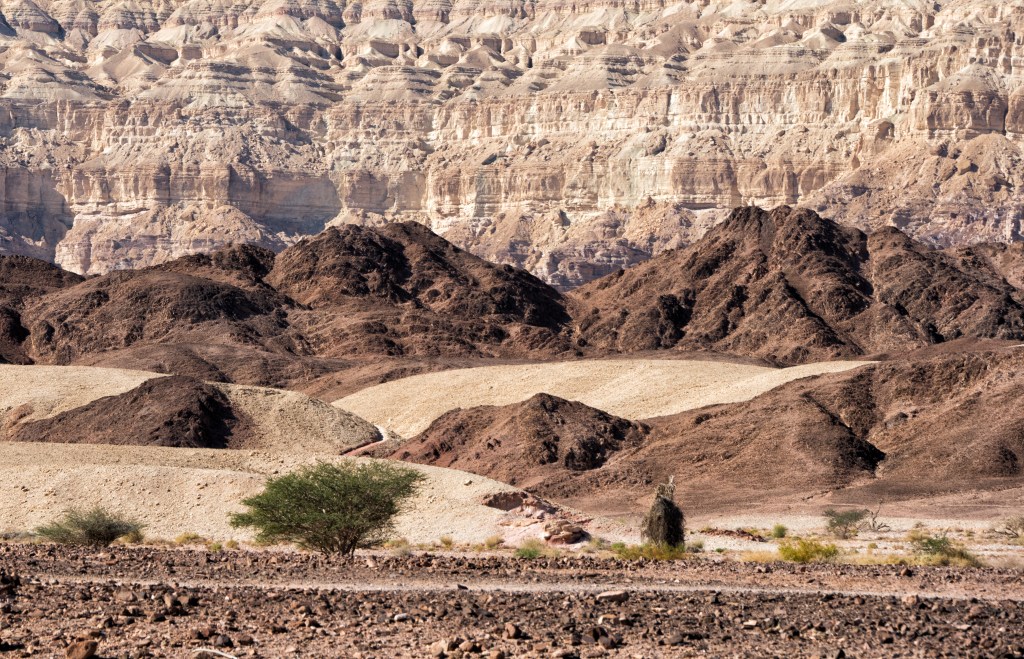
Timna park is located in the southern part of Israel. Archeological evidence points to copper having been mined there over 6,000 years ago and evidence of a thriving culture over the past millenia. Our tour through the park took us by many geological sites. Tonal contrast highlights the diversity of rock formations and vegetation. Deserts are alive with hardy vegetation, and muted brown tones. It is very dry. Any green catches my eye as colour is something that I craved. I wonder how the trees survive.
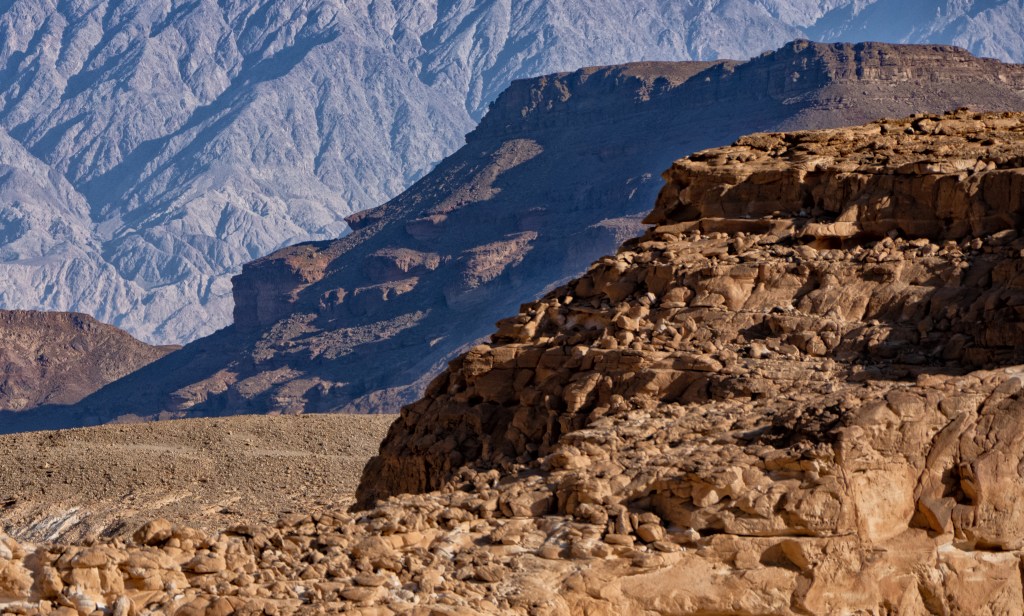
Jordanian mountains in the background, Timna park in the foreground. No green but wonderful light and shadows which caught my eye. The 200mm telephoto lens shortens the distance to the Jordanian mountains. The rocks are crumbling, peaks are flattened and there is no evidence of plant life. Harsh light and strong tonal contrast create harmony between the two ranges.
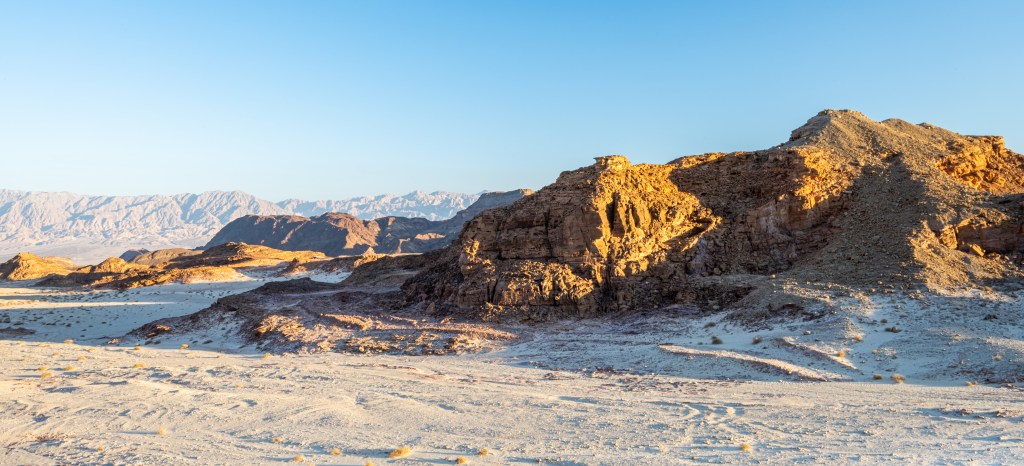
Fading light at Timna park creates long shadows and strong orange yellow tones. Colour at last. I was intrigued by the foreground sand shadows and small shrubs. I felt a sense of familiarity as I was composing this image. If I squinted, I was atop Balfour Col on the Continental divide in Alberta, looking down upon a glacier. The desert was beginning to feel more comfortable.
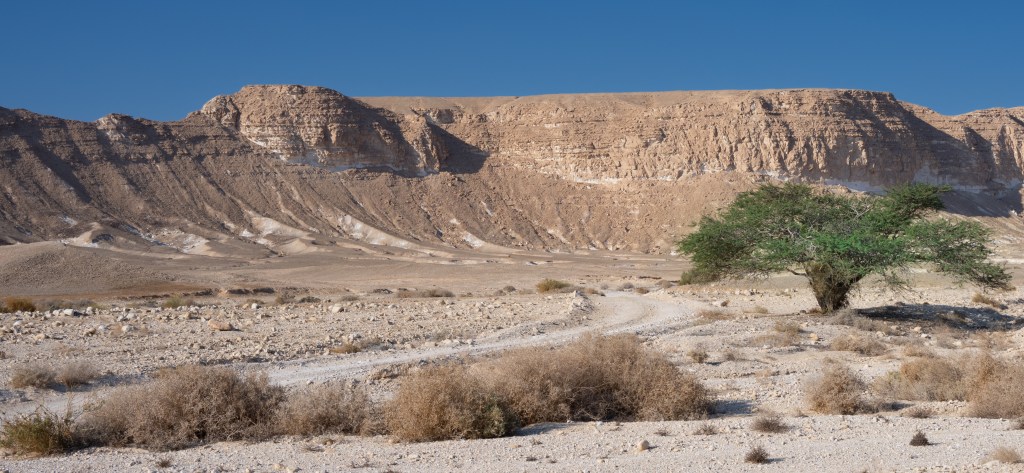
Hot dry sun in Wadi Ashosh just north of Paran Moshav. The large canopy of Acacia tree greenery created some respite from the heat. Their long roots are far reaching sucking up any moisture. Flash floods ensure that the dormant bushes in the foreground will sprout green leaves in the spring. Travel on the desert is by 4X4 SUV or Toyota Hylux truck. There are no paved roads in the desert, only tracks where others have gone. We were informed that the roads in Wadi Ashosh and other areas of the Negev, do get the occasional repairs after flash floods. Otherwise, they are left unattended.
This image above captures the type of terrain the Moshavs have been built upon. As I was composing this photo, I thought about the first people who would have built what has turned out to be prosperous thriving agricultural cooperatives. Why did they come and why have they thrived? Their history of persecution quickly comes to mind but there also had to be the drive and the will to do whatever it takes to make the land arable, and to create a permanent home for their families.
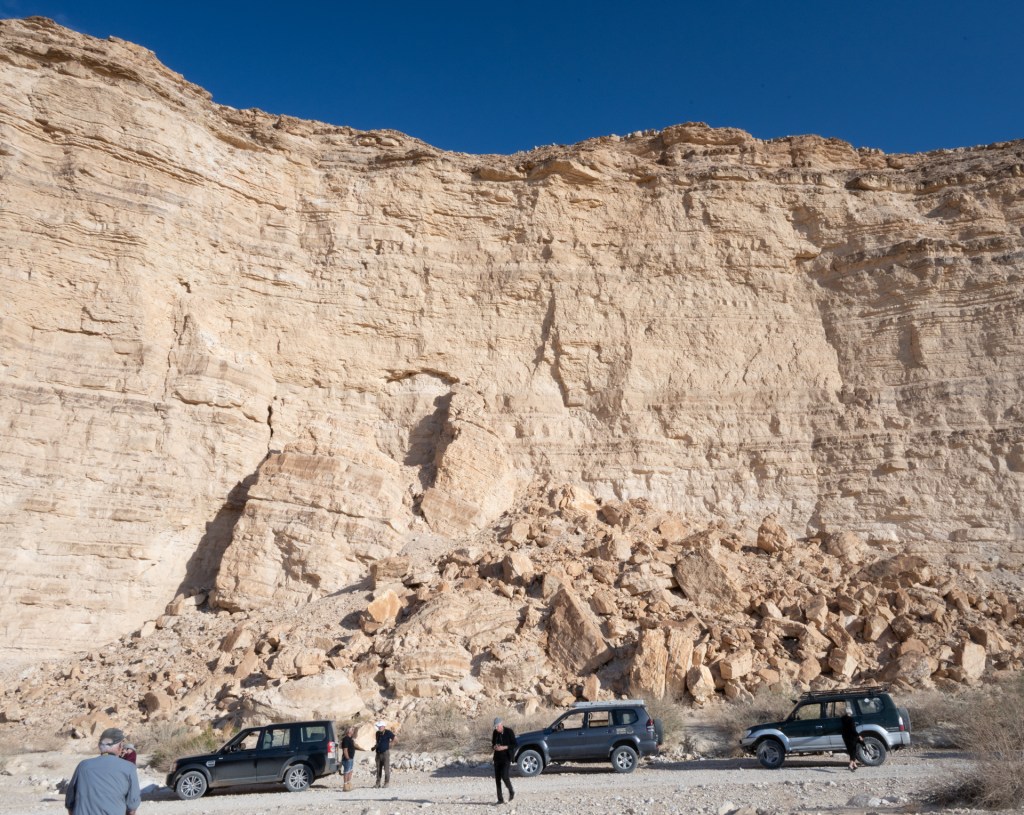
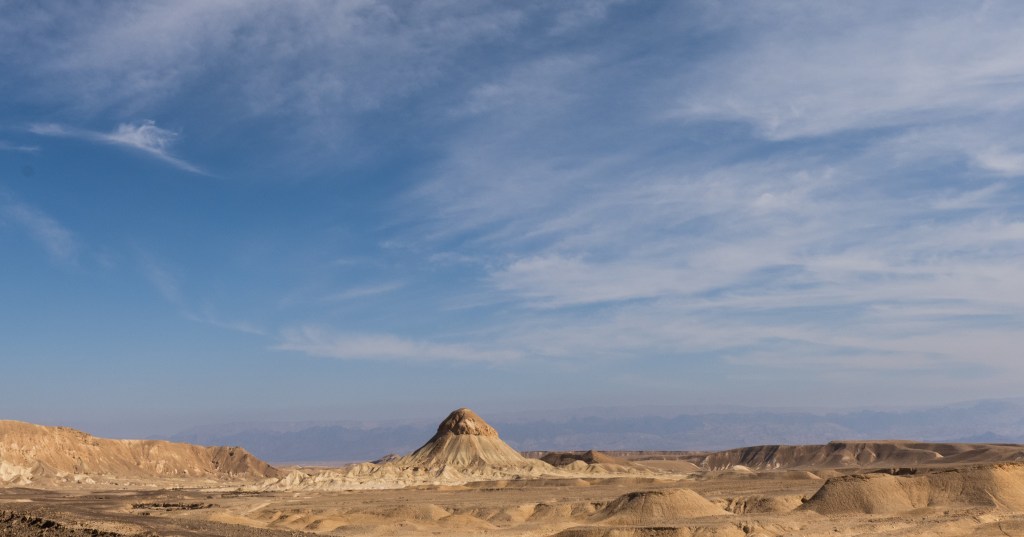
As we descended down into the riverbed along Wadi Ashosh, the cliffs grew taller. Vistas were wide and expansive. The cloud activity added to the harsh beauty. Time has taken its toll on the cliff faces. Slabs of rock have split off and creating large boulders which lie at the base of the cliffs and well into the riverbed. I was intrigued by the peak above which appears defiant, standing tall against nature’s harsh climate.
The two afternoons of field work for the workshop and our excursions to Timna Park and Wadi Ashosh were a great way to prepare for our photo shoot in Petra and Wadi Rum. Next chapter (post) will follow soon.


 Julie Cape Hamilton Photography
Leave a reply to juliechamilton Cancel reply